Blog

  • Best Graphic Design Subscription Services in 2026

    Best Graphic Design Subscription Services in 2026

    Ongoing graphic design needs can be challenging to meet through traditional agencies. That’s because agencies usually quote based on the scope you share upfront, so any new request means re-scoping and re-quoting the work all over again. That slows things down, and it also makes it harder to plan your monthly design budget when costs shift with every new task.


    Design subscription services provide unlimited graphic design deliverables at a fixed monthly cost. So for a fixed monthly or quarterly fee, you can submit design requests as they come up, get designs delivered in record time and skip the back-and-forth on scope and pricing. 

    In this guide, we break down the best graphic design subscription services in 2026 and how to choose the right one for your brand.

    Key takeaways

    • Traditional agencies quote per scope, so every new design request means re-scoping and re-quoting the work all over again.
    • Design subscription services replace that model with a fixed monthly or quarterly fee that covers ongoing design needs
    • Most design subscriptions are design-only, but SoCreative combines graphic design with video, motion graphics, and shoots under one subscription

    What is a graphic design subscription service?

    A graphic design subscription service gives you ongoing access to design work through a monthly or quarterly fee, replacing the per-project model of traditional agencies. You submit requests continuously and receive finished design assets without scoping or quoting each piece of work separately.

    Though keep in mind that the pricing models for design subscription services can vary across credits, hours, unlimited requests, or single-task queues, depending on the provider. The actual services for the monthly subscription price can also vary a lot. While some design subscriptions also offer video production and editing services for the same monthly fee, others are restricted to just graphic design. 

    Best graphic design subscription services

    1. SoCreative


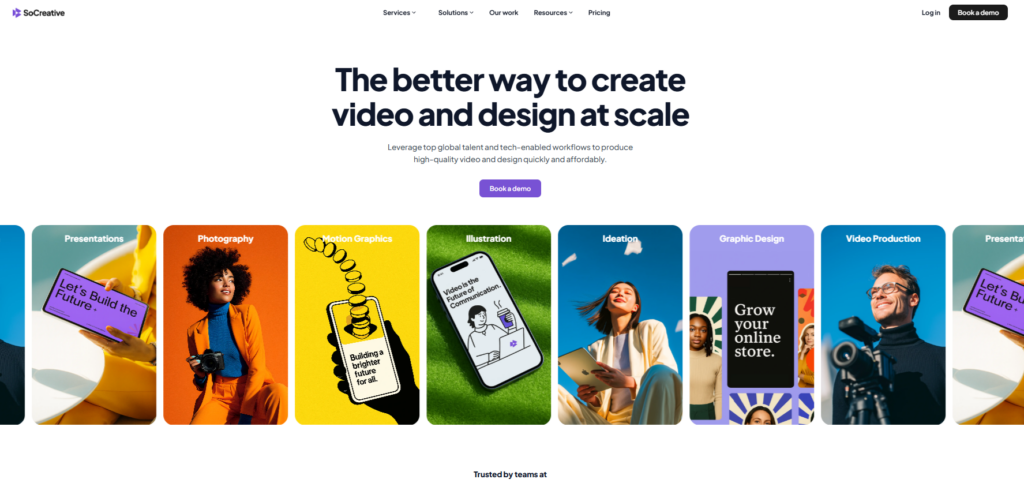
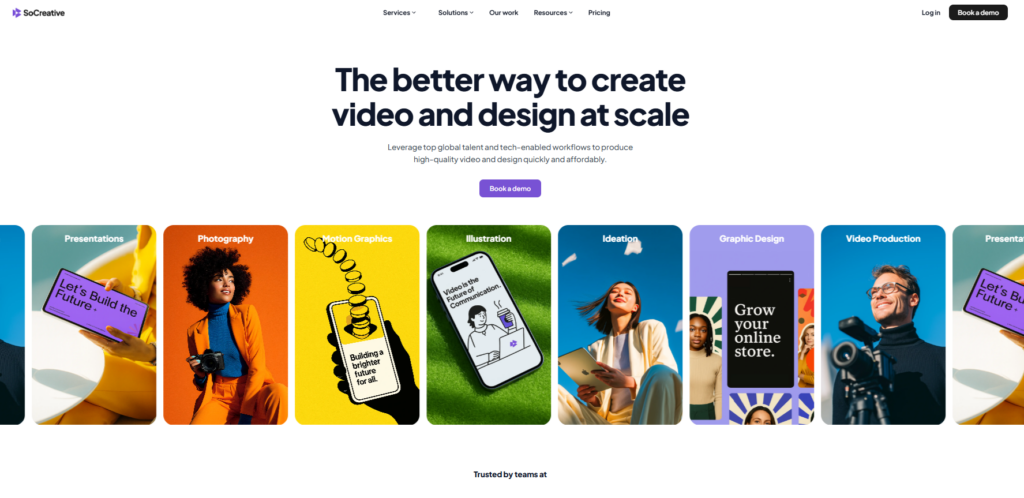
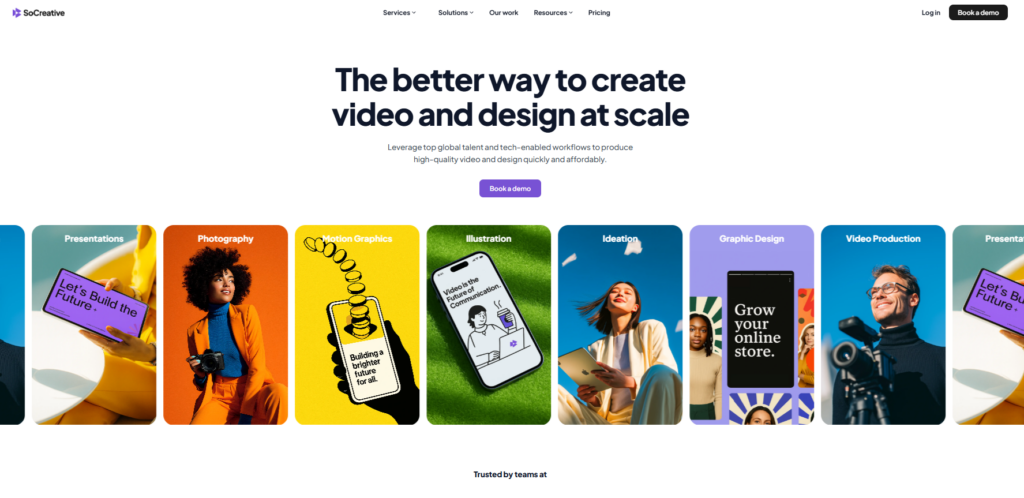
    SoCreative is a subscription-based design and video production service which comes with a credit-based model. You pick a quarterly plan and get a fixed number of credits that you use across graphic design, motion graphics, video editing, and shoots. Each credit represents a finished deliverable, so you know what every project costs before you submit it.


    So, instead of locking you into a design-only subscription plan, SoCreative allows you to use the same credits for any combination of graphic design, animation, or video your team needs that quarter. A dedicated graphic designer works with your brand over time, and your project manager coordinates everything through a centralized platform.

    Strengths

    • Credit-based pricing where you pay per finished deliverable, not hours worked
    • 24-48 hour turnaround on most design and edit requests
    • Credits cover graphic design, motion graphics, video editing, and shoots
    • Quarterly plans starting at $4,200/quarter with no annual lock-in
    2. Design Pickle

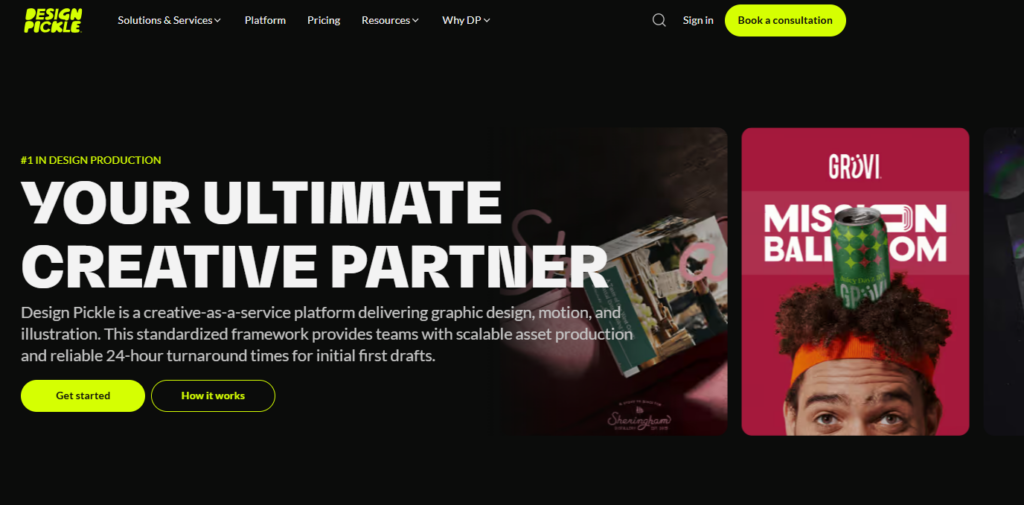
    Design Pickle is also a design subscription service but it is built around a capacity-based model where you pay for a set number of creative hours per day. The base plan starts at $1,600/month for two daily hours of work, with a defined scope that covers items like trademarked logos, animated logos, email signatures, light page designs, and sales sheets. For broader design needs like social media graphics, you’ll need to move to a higher tier.

    3. Superside

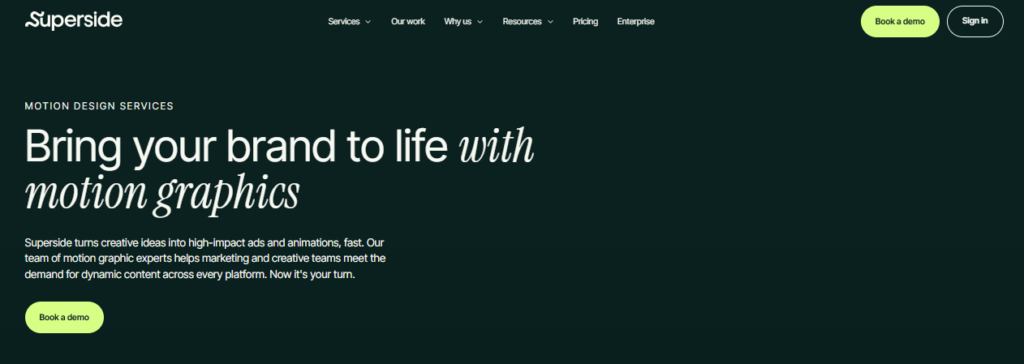
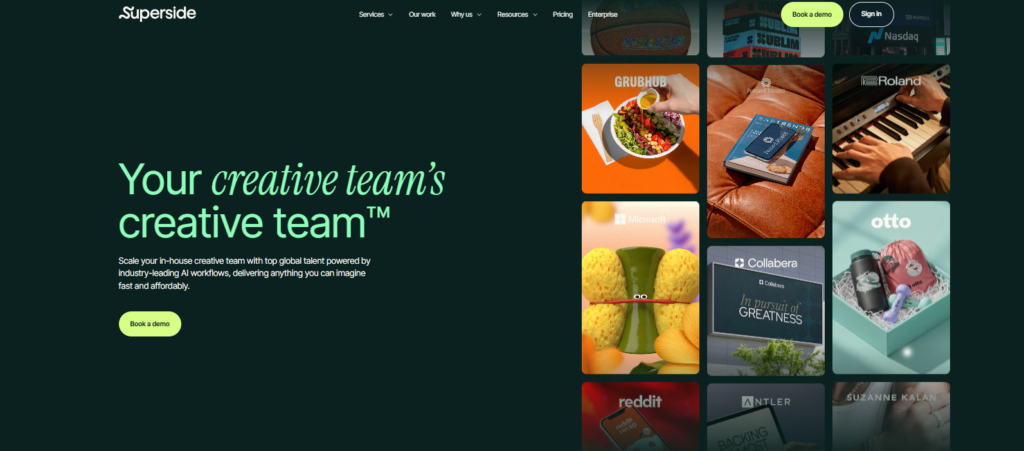
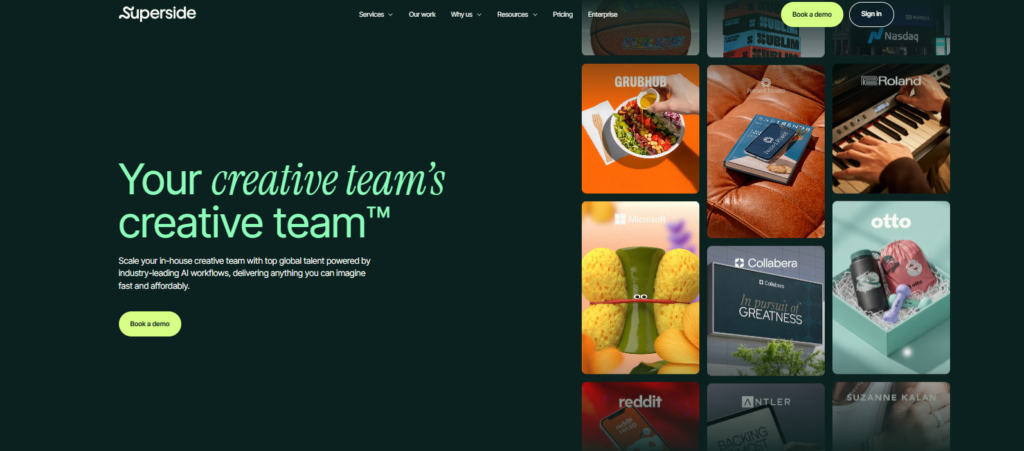
    Superside offers an enterprise-grade subscription that bundles graphic design with video production, motion graphics, and creative strategy under one contract. The service includes access to a large global creative team and supports end-to-end production from concept to final delivery. 

    Pricing for the subscription plan is not shared on Superside’s website and there’s also a 12-month minimum commitment along with a service fee. 
    4. ManyPixels

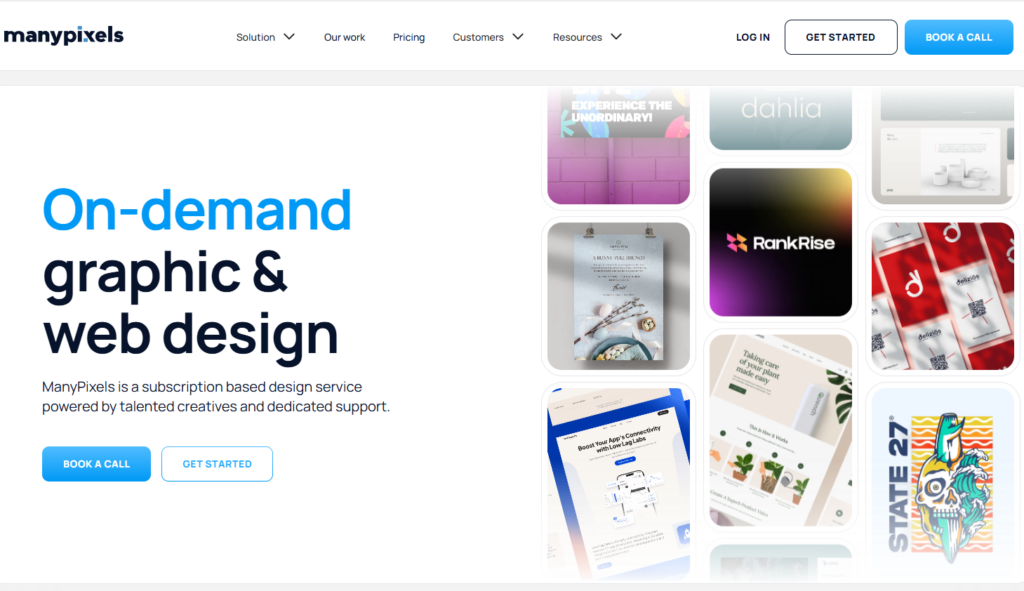
    ManyPixels covers a broad range of graphic design work, including illustrations, UI design, and marketing assets. The pricing starts at $699/month with one daily output and next-day delivery.While  the single-output-per-day model keeps the pricing affordable, it also limits volume for larger teams.
    5. Kimp

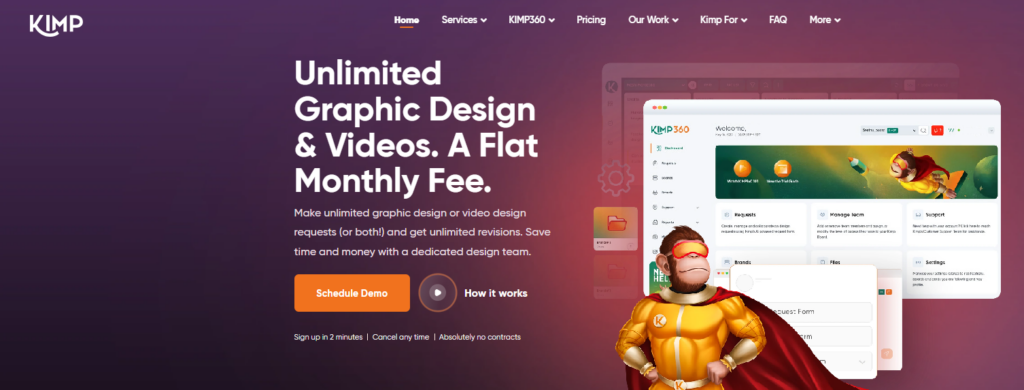
    Kimp offers a flat monthly subscription that includes unlimited graphic design requests handled by a dedicated creative team. The Graphics plan starts at $698.50 per month and covers static design, illustrations, and marketing assets. There’s also a combined Graphics + Video plan that adds video editing and motion graphics, but at a higher rate. 
    6. Penji

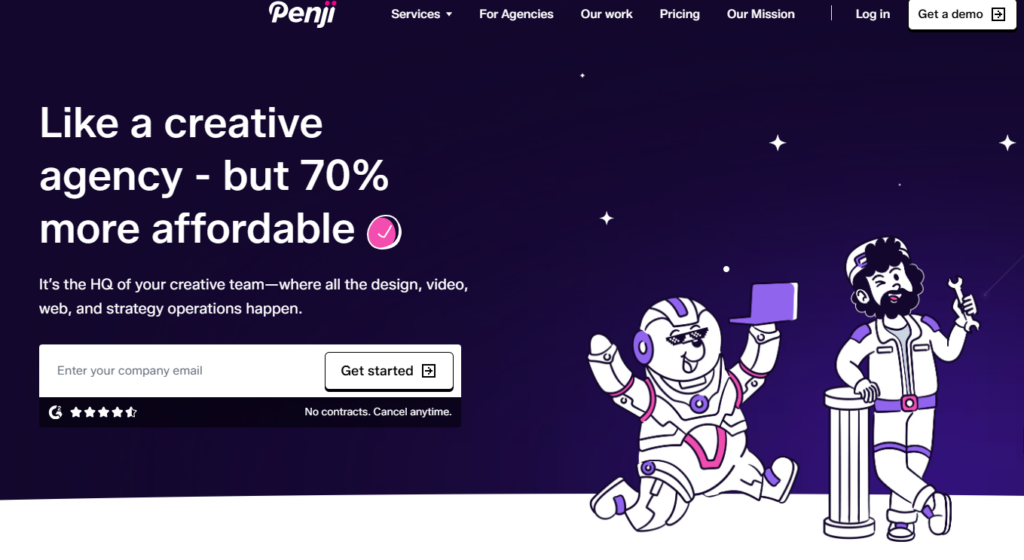
    Penji is a graphic design subscription that pairs a dedicated design team with AI-enhanced creative tools. The platform handles project management through an interactive dashboard, and the service covers everything from design and ads to animations. The base plan starts at $499 per month and supports one project at a time with one-day delivery.
    8. Undullify

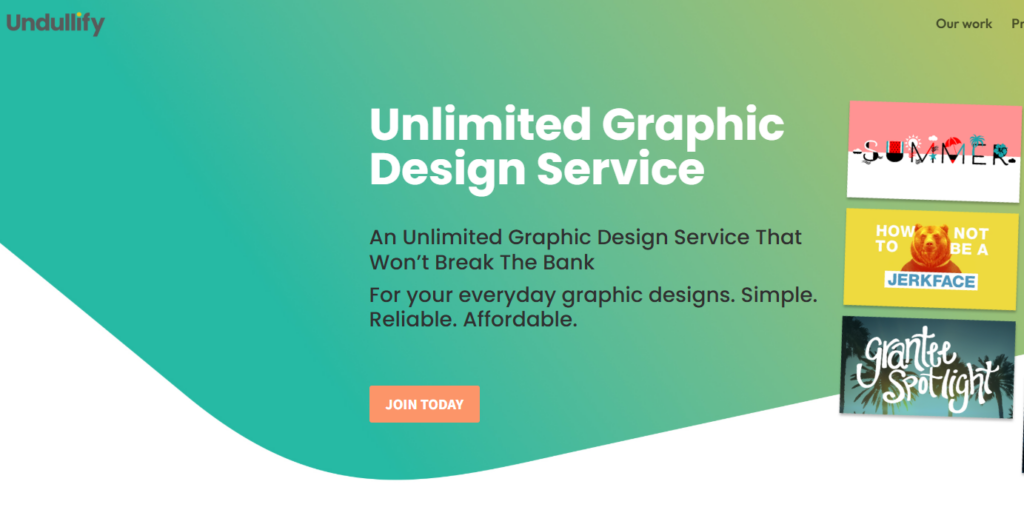
    Undullify is a graphic design subscription service that pairs you with a dedicated designer who learns your brand and working style. The model is built around small graphic design tasks, anything that can be completed within 30 minutes, with unlimited requests and unlimited revisions across all plans. The base plan starts at $149 per month with a 3 business day turnaround time and one active task at a time.
    Choose the right graphic design subscription for your brand

    The best graphic design subscription depends on what you’re producing and how often. If design sits alongside video, motion graphics, and shoots in your content pipeline, SoCreative consolidates all of that under one workflow with credits that flex across formats. Quarterly plans, transparent pricing, and 24048 hour turnaround make it a strong fit for brands scaling design and video together.

    FAQs

    How fast can graphic design subscription services deliver work? 

    Turnaround times can depend a lot on the design subscription service you choose. Some services offer same-day or next-day delivery for small tasks, others may take a longer time. 


    What types of design work do these subscriptions cover?

    Most graphic design subscription services cover marketing collateral, social media graphics, ad creative, presentations, illustrations, and landing pages. Some extend into UI/UX, motion graphics, and animation, while others focus narrowly on static design. SoCreative is one of the few services that combines graphic design with video and motion under the same subscription price.

  • Top Video Animation Services for Brands in 2026

    Top Video Animation Services for Brands in 2026

    Good animation can be hard to scale. The more videos you produce, the harder it gets to keep them looking consistent. A good video animation service takes that work off your plate so you can focus on the strategy part of things without worrying about video production. In this guide, we break down the top video animation services to help you choose the right one for your brand.


    Key takeaways

    • Video animation services span 2D, 3D, motion graphics, whiteboard, and explainer formats
    • Traditional animation agencies deliver high-craft work but operate on project cycles, which can stretch timelines and costs when you need ongoing output
    • Subscription-based providers like SoCreative consolidate animation, motion graphics, and shoots under one workflow, with turnaround of  24-48 hours on most edits
    • Pricing transparency varies widely across the category. Most agencies ask you to share your requirements so they can send a customized quote. Subscription services tend to publish plans openly on the website

    What is a video animation service?

    A video animation service produces content that uses motion design, illustration, or character animation instead of live-action footage. The work can include but isn’t limited to 2D and 3D animation, motion graphics, whiteboard animation, explainer videos, and animated promotional videos. 

    Best video animation services for brands

    1. SoCreative

    SoCreative is a subscription-based video production service built around a credit-based model. You pick a quarterly plan, get a fixed number of credits, and use them for animated explainer video services, motion graphics, video shoots, editing, and design work. Each credit represents a finished deliverable, so you know what every project costs before you submit it. 


    For every animated video you need, you submit a brief and the team takes it from there. In-house designers handle the 2D animation and motion graphics, while your project manager keeps everything on track. Most edits come back within 24-48 hours, and for bigger campaigns, you get a clear timeline upfront. 


    The best part is that you are not restricted to just animated videos. You can get any type of videos delivered, based on your running campaigns and requirements. 

    –> Learn more about how SoCreative’s video subscription services work

    Strengths

    • Animation included from the Starter plan, with motion graphics and 2D animation covered under the same credits as other deliverables
    • 24-48 hour turnaround on most edits, so animated content lands in time for active campaigns
    • One platform for the entire workflow, from briefs and feedback to revisions and delivery
    • Transparent pricing, with the Starter plan starting at $4,200/quarter and all credit allocations published openly

    2. Demo Duck

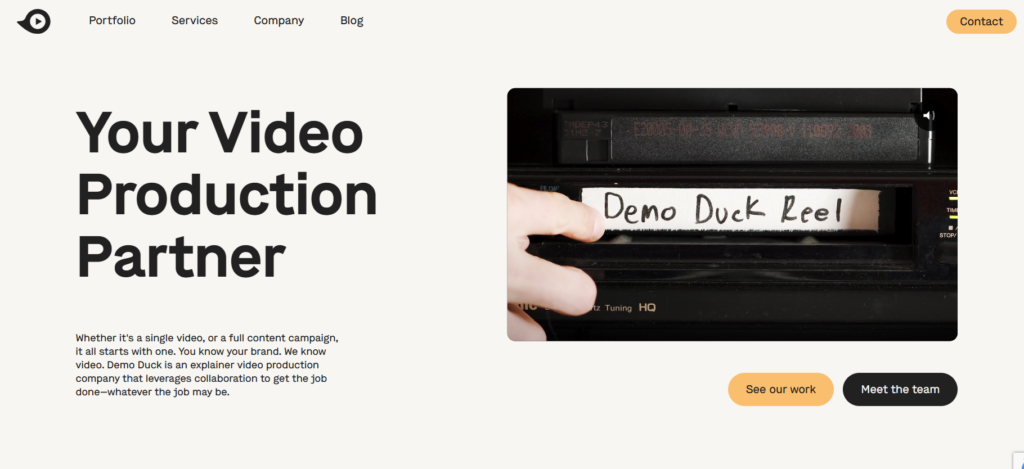
    Demo Duck is an animation video agency known for explainer videos, brand storytelling, and a wide range of animated formats. The team works across 2D and 3D animation, motion graphics, stop motion, papercraft, and screencasting, which makes them a strong choice for brands looking for stylistic range.


    The model is project-based, with a collaborative approach to scoping each video around your brand and message.

    Though Demo Duck does not support video shoots or share pricing transparently on their website.

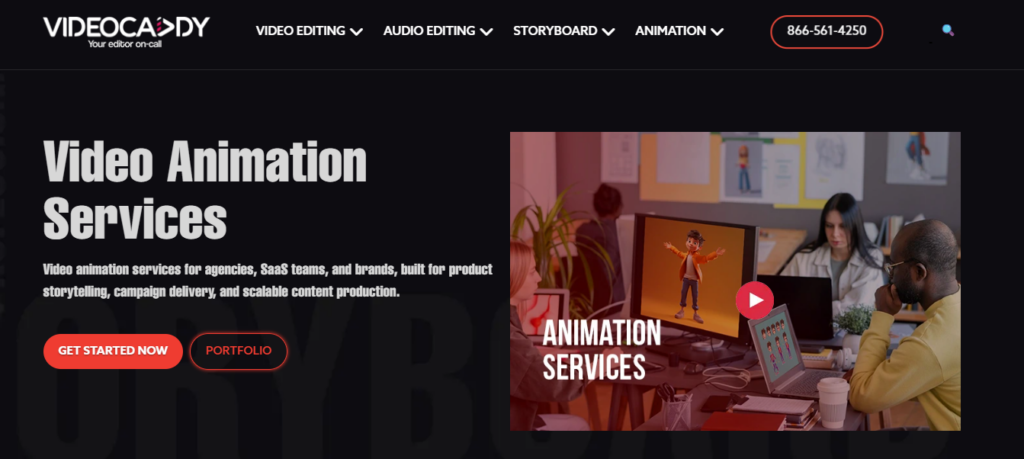
    3. Video Caddy

    Video Caddy offers animated video production services for agencies, SaaS teams, and brands that need consistent execution across campaigns. Their services cover explainer and product animation, marketing and ad animation, corporate and training animation, character and narrative animation, and post-production support.

    Pricing is only shared on request and Video Caddy also does not support video shoots.

    4. Animation Monster

    Animation Monster is an LA-based animation studio that produces 2D, 3D, whiteboard, and animated promotional video services. The team focuses on creating original concepts and brand-aligned animation, with an emphasis on competitive research before production starts.

    The service is positioned around custom animation services for brands looking to stand out in their category. Monthly pricing plans are only shared on request

    5. Yum Yum Videos

    Yum Yum Videos is an animation-focused agency known for animated explainer video services across product demos, whiteboard animation, and training videos.

    To get a custom quote from Yum Yum videos, you need to first fill out a huge form.

    6. Superside

    Superside offers a subscription model that combines animation services with design, motion, and creative strategy under one contract. The video subscription service is designed for enterprise teams that need consistent animated output across multiple regions and campaigns, and the service includes AI-driven workflows alongside a large global creative team.


    Pricing isn’t published on the website and is typically customized based on scope and team size.

    7. Kimp

    Kimp offers a flat monthly subscription that includes unlimited video editing, motion graphics, and design requests, handled by a dedicated creative team. The combined Graphics + Video plan covers a wide range of animated content types under a single rate, which works well for teams producing high volumes of motion graphics each month.

    Pricing starts around $698/month for video services and $848/month for the combined video and design plan.


    Choose the right video animation service for your brand

    The best video animation service for your brand depends on what you’re producing and how often. If you need one or two high-craft explainers a year, an animation-first agency can deliver depth and stylistic range. But if you need animation alongside video editing, shoots, and design as part of an ongoing content pipeline, a subscription model is usually the better fit.

    For brands producing animation regularly, structured platforms like SoCreative offer a way to manage the work without adding complexity. Animation sits alongside shoots, editing, and design under one workflow, with predictable pricing and 24-48 hour turnaround.

    FAQs

    What types of videos are included in animation services for brands? 

    Animation services for brands typically cover 2D and 3D animation, motion graphics, whiteboard animation, animated explainer videos, character animation, and animated promotional videos. The specific scope depends on the provider, with some specializing in explainers and others offering broader 2D video animation services across marketing, sales, and training.

    How long does an animated video take to produce? 

    Traditional animated video production services can take six to eight weeks per video, with several weeks dedicated to pre-production alone. Subscription-based animation services can deliver edits, motion graphics, and shorter animated assets within 24-48 hours, with larger campaigns getting confirmed timelines upfront.

    How much do animated video services cost? 

    Project-based animation agencies often charge per minute of finished video, with rates ranging from a few thousand dollars to $15,000+ per minute depending on craft and complexity. Subscription-based video and animation production services use fixed monthly or quarterly pricing, which makes budgeting more predictable for ongoing animation needs.

    What’s the difference between 2D and 3D animation video services? 

    2D video animation services use flat illustration and motion to tell stories, and they’re typically faster and more cost-effective for explainer videos, social content, and marketing animation. 3D video animation services add depth, realism, and dimensional movement, which makes them better suited for product visualization, complex demonstrations, and high-craft brand films.

  • 5 Brand Video Examples That Show What Actually Works in 2026

    5 Brand Video Examples That Show What Actually Works in 2026


    A well-made brand video can do in a minute what a homepage cannot do in five. It can give the viewers a sense of who you are, what you stand for, and why any of it should matter to them. When done well, it really sticks. When done poorly, it disappears into the ever changing feeds as everything else.

    But what actually makes a brand video work? What separates a video that earns attention from one that just fills space? And how do you know which moves to study and which to skip?

    The best way to answer that is to look at brands that have already done it well. Below are best brand video examples, across brand story, awareness, corporate, customer-led, and culture videos, broken down by the specific move each one makes and what you can learn from it.

    Best brand story video examples

    1. Airbnb, “Belong Anywhere”

    In this brand video, Airbnb does not show you houses. It shows you the people inside them–Hosts and travelers from around the globe, neighbors meeting, shared moments across cultures.

    Why it works: Airbnb sells lodging on paper, but in practice, it sells the idea that you can feel at home somewhere you have never been. By focusing on shared human experiences rather than properties, the video positions Airbnb as a community enabler, not a marketplace.

    What to copy: If your product is a tool, the brand story should rarely be about the tool. Pick the human outcome your product enables and then build the video around someone living it.

    2. Apple, “The Underdogs”

    Apple turned a brand film into a short film about office workers creating a product pitch in 48 hours. Apple devices appear naturally inside the work, never as the focus.

    Why it works: A traditional brand video would show the products and explain the features. Apple flips it. The story carries the weight, the characters are memorable, and the brand message shines through without being stated.

    What to copy: Write the story first. Decide where your product fits second. If your product cannot earn its place in a story without being narrated into it, the story needs more work.

    3. LEGO, “Rebuild the World”

    LEGO leans into whimsical, fantasy-like visuals. Imaginative sets, clever effects, and childlike wonder render the brand promise on screen. The promise of creativity for every generation is shown, not stated.

    Why it works: A brand built on imagination has to demonstrate imagination in its marketing. A polished, conventional ad would undercut the message.

    What to copy: Match your production style to the brand promise. If you sell precision, the video should feel precise. If you sell warmth, the pacing should feel warm. 

    4. Adidas, “Impossible Is Nothing”

    The move: A series, not a film. Each episode features athlete testimonials and comeback stories. Same format, different person, every episode.

    Why it works: One ad runs once and disappears. A series builds compounding returns. Viewers learn the format, look forward to the next episode, and start associating the brand with the feeling the format creates.

    What to copy: Stop thinking in films. Start thinking in formats. A format you can produce ten times beats a film you can produce once.


    How to produce brand video examples like these without the usual bottlenecks

    If you have read this far, you do not need another reminder that good brand videos matter. You need a way to produce them without losing a quarter to vendor coordination.

    SoCreative offers a production infrastructure that helps you scale video production while still maintaining quality. You submit a brief on the platform. You get matched with a vetted videographer from the global network. The team delivers most edits in 24-48 hours. Briefs, feedback, revisions, and delivery all happen in one place. Pricing runs on fixed credits per quarter, so you can plan output without renegotiating every time the scope shifts.

    FAQs

    How long should a brand video be?

    It depends on the channel. Short-form social rewards 15–30 seconds. YouTube pre-roll works at 6 or 30. A brand story film for a homepage can run 60–90 seconds. A documentary-style customer film can run 5–10 minutes. The wrong question is “how long should the video be.” The right question is “where will it run, and what is the viewer doing when they see it.”

    How much do brand videos cost?

    Project pricing varies wildly because every shoot is scoped from scratch. That is the cost problem most teams hit. A credit-based model removes the per-project negotiation and gives you predictable budgeting across the quarter. You allocate credits to whatever mix of videos you need next.

    How fast can a brand video be produced?

    The bottleneck is rarely shooting. It is sourcing, scoping, briefing, and editing. With a centralized platform and a vetted videographer network, most edits move in 24–48 hours after the shoot. Multi-region campaigns that used to take weeks of vendor sourcing run in days.

    Does SoCreative support global shoots?

    Yes, SoCreative supports it. The platform runs on a global videographer network, so you can produce video across multiple regions without building a separate vendor relationship in each market. Multi-region campaigns that used to take weeks of vendor sourcing run in days.

    Do we need a separate plan for each video type?

    No, you do not. The strongest brand video portfolios run on a shared foundation. One brand position, one tone, and one set of visual guidelines, adapted across formats. You plan the foundation once and produce the formats continuously from there.

  • Superside Alternatives [2026]

    Superside Alternatives [2026]

    Superside is a design subscription platform that bundles video production, design, motion graphics, and creative strategy into a single service. For enterprise marketing teams with enterprise budgets, it works. But it may not be the right fit for every team, here’s why: 

    • Pricing isn’t transparent: Superside doesn’t publicly share monthly plan costs or credit allocations on its website. You have to book a demo to find out whether it fits your budget.
    • A one-year minimum commitment: Every Superside plan requires a 12-month contract. For scaling companies where priorities shift quarter to quarter, that can be a hard ask.
    • Monthly service fee: On top of the production budget, Superside also charges a separate $1,000 platform fee each month. For enterprise spends it’s negligible; for smaller budgets, it’s a meaningful share of total cost.
    • Built for enterprise: The service is optimized for large enterprise marketing teams and in-house agencies

    If any of those are friction points, here are the top Superside alternatives should consider:


    Key takeaways

    • Superside is built for enterprise. It comes with12-month contracts and a $1,000 monthly platform fee 
    • SoCreative is the closest full-service alternative, with public pricing, quarterly plans, and credits that cover shoots, editing, motion graphics, and design.
    • Design Pickle and Kimp work well for graphic design at scale, but both have limited video capabilities and no shoot support.
    • Shootsta fits teams that already film internally and need to scale post-production, not teams looking for end-to-end production.

    1. SoCreative

    SoCreative is a subscription-based video and design production service built around a transparent, credit-based model. So, instead of paying for total creative hours or bundled enterprise services, you pay for finished deliverables. With your monthly plan,  credits can be allocated across video shoots, editing, motion graphics, and design work.

    Every plan includes a centralized platform for briefs, feedback, and delivery. Video editing is handled by dedicated in-house editors. Shoots are fulfilled through a global network of vetted videographers and photographers, coordinated through the same platform. Most edits are delivered in 24-48 hours.

    There’s no annual lock-in and subscriptions are quarterly. If you have any credits left at the end of the month, they get rolled over to the next month (as long as your subscription stays active).

    SoCreative is built for teams that need transparent pricing, flexible commitment terms, and a model that works from month one. (Take a look at our in-depth SoCreative vs Superside comparison)

    Why teams choose SoCreative over Superside

    • Transparent pricing: All plans, credit allocations, and per-credit costs are published publicly. There’s no demo required to find out what it costs.
    • No annual commitment: Subscriptions run quarterly, not yearly. Adjust plans as your needs change.
    • No separate service fee: The platform, briefing tools, and design service are all included in the subscription price.
    • Credit-based model: Credits can be used flexibly across shoots, edits, motion graphics, and design.
    • End-to-end video production: SoCreative also supports shoots through the global videographer network, not just editing.
    • 24–48 hour turnaround: Most video edits get delivered in a day or two so you can always launch your campaigns on time.
    • Fits any team size: SoCreative is built for startups, scaling companies, and global enterprises alike.

    2. Design Pickle

    Design Pickle is a subscription-based creative service focused on graphic design at scale, with limited video editing capabilities gated behind higher-tier plans. Pricing runs on a capacity model where you pay for creative hours per day rather than finished deliverables.

    –> Take a look at our in-depth SoCreative vs Design Pickle comparison

    Pros

    • Unlimited revisions across all plans
    • 1-2 business day turnaround on design work
    • Broad coverage on graphic design, illustrations, presentations
    • Dedicated team matched to your brand

    Cons

    • Pricing tied to hours, not output which makes scaling video production unpredictable
    • Video editing only available on the $2,300/month plan. And even then, only one final edited video per month on the video-enabled plan
    • No support for video shoots

    3. Kimp

    Kimp offers unlimited design and video editing requests on a flat monthly subscription. Their combined Graphics + Video plan bundles static design with video editing and motion graphics into a single rate.


    Pros

    • Unlimited video editing and design requests on a flat monthly rate
    • Combined Graphics + Video plan covers 100+ content types
    • Unlimited team members on all plans


    Cons

    • No support for video shoots; editing only
    • Complex designs and videos can take 2-4 business days
    • Not built for large-scale production or multi-region campaigns

    4. Shootsta

    Shootsta runs a hybrid model where your team captures footage internally while Shootsta’s platform and editing team handle post-production. It’s designed for organizations that want to scale video production without fully outsourcing the filming step.

    Pros

    • Scripting tools, project management, and asset storage included
    • Built for scaling video across internal teams and regions
    • Good fit for organizations with internal video capability

    Cons

    • Your team has to handle shooting and footage capture
    • Pricing isn’t clearly published
    • Not a full-service production option

    Choose the right Superside alternative

    Superside is built for enterprise teams with enterprise budgets, and for those teams, it delivers. But if you’re working with a leaner budget, need to see pricing before committing to a sales call, or can’t sign a 12-month contract when your priorities shift every quarter, the model can feel like it wasn’t designed with you in mind.

    SoCreative was built for teams in that position. All pricing is published upfront, subscriptions run quarterly, and credits can be allocated across shoots, editing, motion graphics, and design, so your production budget flexes with your actual needs rather than a contract you agreed to months ago.

  • SoCreative vs Design Agencies: Which One is Right For Your Brand?

    SoCreative vs Design Agencies: Which One is Right For Your Brand?

    Onboarding a design agency used to be the default answer for video and graphic design production and it didn’t matter whether you were a growing startup or an enterprise. If you needed quality work, you paid for a retainer, accepted the timelines, and hoped your requirements didn’t shift mid-flight.

    But every time a new requirement came up, the project had to be re-scoped with new quotes, new timelines, and new approvals. And while all of that was happening, your team was losing critical time that should have been spent executing and scaling production.

    That model is starting to show its limits. SoCreative, a design subscription service offers a different approach, one that’s built for continuous output instead of project-by-project scoping. You get a fixed number of credits per quarter and use them across video shoots, editing, motion graphics, and graphic design. 

    In this blog, we compare SoCreative and design agencies on the basis of cost, speed, flexibility, and fit.

    What is SoCreative?

    SoCreative is a subscription-based video and design production service where you submit briefs through a centralized platform, get matched with videographers from a global network or the in-house editors, and receive final videos and design assets within 24 to 48 hours.

    For a fixed quarterly fee, you get a fixed number of credits that can be used for any kind of design work, including video shoots, video editing and post-production, motion graphics and animation, and graphic design for video and marketing assets. You decide how to allocate credits each week based on what your campaigns actually need.

    Every plan includes a dedicated project manager, unlimited users and asset storage, global timezone coverage, and stock music and AI licensing. Credits roll over while your subscription is active, and plans can be paused for up to 90 days without losing them.

    –> Learn more about how SoCreative works

    How do design agencies work?

    Design agencies operate on a project-based model. You brief the agency, they scope the work, provide a quote, and deliver within an agreed timeline. For every new requirement or change in direction, the project gets re-scoped.

    Some agencies offer monthly retainers instead of per-project pricing. The retainer gives you access to a set amount of the agency’s time each month. But the amount stays fixed regardless of whether your needs spike or drop. Quiet months burn the budget on output you didn’t need. Busy months push past the retainer and trigger overage fees.

    What agencies do well and where they hit their structural limits

    When you have a tentpole campaign that needs deep concepting, original creative direction, and multiple rounds of stakeholder alignment, a good agency earns its fee. They bring strategic thinking, production craft, and a team that can pull off the kind of work that moves a brand.


    The problem is what happens when video stops being a campaign and starts being a pipeline–which is what brands need today to stay relevant online.

    Here are some of the many places where agencies hit their structural limits: 

    Every project gets re-scoped: Agencies price by project, which means every new deliverable triggers a new quotation and negotiations

    Timelines are measured in weeks: Agency turnarounds are built around the rhythm of their teams, not yours. Getting an urgent video edited can be incredibly difficult.


    Pricing isn’t always transparent: Agency pricing depends on who’s assigned, what’s included, what counts as a revision, and what gets billed separately. Two brands running identical campaigns can pay very different amounts. That’s fine when you’re budgeting one project at a time but it becomes a problem when you are trying to plan video production across a year.

    SoCreative is built for continuous production

    SoCreative’s production infrastructure is built around the way marketing teams actually ship video now.

    When you submit a brief, you get matched with a videographer from a global network. Raw footage comes back, goes through editing, and lands in your queue–typically within 24-48 hours.

    Here are some of the many advantages of partnering with SoCreative for your design requirements.

    Scope doesn’t reset: Your second project isn’t a new negotiation. Credits get allocated based on complexity, and you decide where they go each week/month.

    Pricing is predictable: You know exactly what you are spending each quarter. Unused credits don’t create surprise invoices, and scaling up doesn’t trigger an overuse negotiation.

    Turnaround is measured in days: Most edits are delivered within 24-48 hours so you can continuously push out new campaigns with zero bottlenecks or delays. 

    Global production runs without vendor sourcing: SoCreative’s network of vetted videographers covers multiple regions. Multi-market shoots don’t require building a new vendor network for each location.

    SoCreative vs agencies: How the two approaches compare

    Traditional agencySoCreative
    Pricing modelCustom quotes per project or fixed retainerFixed credits per quarter which makes the pricing predictable
    Scope handlingRe-scoped for every new deliverableCredits allocated flexibly, with no need for re-scoping
    TurnaroundMulti-week timelines standard24-48 hours for most edits
    Output volumeBest for a few big projects per yearBuilt for continuous, high-volume output
    ScalabilitySlow to scale with capacity fixed by team sizeFlex up or down each quarter
    RevisionsBilled per round or capped by retainerStructured feedback, no surprise fees
    CollaborationEmail chains, scattered feedbackOne centralized platform for everything
    CommitmentLong retainer contracts or repeated project SOWsSubscription-based, adjustable each quarter


    Start producing video without the agency bottleneck

    If you’re running a marketing team that ships constantly, the agency model probably isn’t slowing you down because your agency is bad. It’s slowing you down because the model was built for a different kind of work.

    SoCreative gives you a way to produce video at the pace your channels actually demand with predictable costs, fast turnaround, and no re-scoping every time your plans shift.

    Book a demo to see how it works. We’ll walk through how the platform fits into your current setup, based on your volume, your turnaround needs, and the kind of production your team actually ships.

  • SoCreative vs In-House Design Teams: Which Is Right for Your Brand?

    SoCreative vs In-House Design Teams: Which Is Right for Your Brand?

    Scaling video production and graphic design with just your in-house team sounds simple until you actually try to do it.

    You have to schedule shoots, source and brief videographers, get the videos edited, go through all the revisions, and make sure the final output is approved by all the stakeholders. And your marketing team has to do it while still managing their existing responsibilities. 

    In the end, your marketing team members can barely keep up, budgets shoot up drastically and you still struggle to scale production. 

    SoCreative is a design subscription service that helps brands scale their video and graphic design needs without impacting their budgets or timelines.

    The real question isn’t in-house or SoCreative–its where each one fits in your marketing production function. 

    What in-house teams do well and where they hit their structural limits

    In-house teams have the real advantage of knowing the brand inside out. They understand the tone, the internal language, and the stakeholder dynamics in the company. You don’t need to go through the whole onboarding process or worry about their availability when a new campaign kicks off.

    For brands producing consistent, predictable volumes of work, a well-resourced in-house team is hard to beat.

    But the question isn’t whether your marketing team is capable of producing high-quality assets. It’s whether they can keep up when demand surges. And for most internal teams, that’s where the structural limits start showing up.

    Capacity is tied to headcount

    A product launch requires five times the usual video output for six weeks. Then the campaign ends and demand drops just as fast.

    But you can’t add three full-time video editors for a sprint and remove them when the campaign is over. Hiring takes months and it carries a fixed cost which can include salary, benefits, tools, onboarding.

    That makes in-house teams expensive during quiet periods and undersized during busy ones. There’s no flexibility in the model.

    Video production is a different capability set

    Most in-house teams are design-first and skilled at static assets, decks, and brand materials. Full video production services, from shoot coordination to editing to motion graphics, require specialist skills. Even if you have video editors on the team, you would still have to look for freelance videographers for shoots. 

    Building that capability in-house means hiring for roles that are expensive, hard to find, and underutilized outside of campaign peaks.

    Multi-region shoots add coordination overhead

    When a campaign needs shoots across multiple markets, your in-house team has to source, vet, and manage local videographers independently. That process can take longer than the production itself. It’s a workflow your team wasn’t built to run.

    What SoCreative adds to an in-house setup

    SoCreative is a design subscription service built for ongoing video and graphic design production. You submit briefs through a centralized platform, get matched with videographers from a global network or the in-house video editors, and receive edited videos and design assets delivered within 24 to 48 hours.

    It is not a replacement for your in-house team. It’s the production layer that picks up what your team can’t absorb, including the overflow edits, the campaign spikes, and the multi-region shoots. And SoCreative does all that without adding headcount, extending timelines, or locking you into commitments that are hard to reverse.


    The model is credit-based. You get a fixed number of credits per quarter and allocate them across whatever you need, whether it’s shoots, edits, motion graphics, or variations for paid campaigns. When demand spikes, you use more of your credits. When it drops, you’re not carrying a headcount you don’t need. Your credits can also get rolled onto the next quarter.

    Here are some of the many advantages of using SoCreative

    Your team stays focused on strategy: Your in-house team keeps doing what they do best: brand direction, creative strategy, stakeholder alignment. SoCreative handles the production volume that would otherwise stretch them past their bandwidth.

    Execution scales without hiring: You can easily add more requests as campaigns grow, without renegotiating scope, onboarding new vendors, or waiting months for a new hire to ramp up production.

    Global shoots run without vendor sourcing: SoCreative’s global network of vetted videographers and in-house video editors can handle the whole process, end-to-end. Your team doesn’t have to build separate vendor relationships in each market and then follow up with each one. 

    Everything lives in one place: Briefs, assets, feedback, revisions, and delivery all happen on a centralized platform which means super easy coordination and zero communication gaps.

    SoCreative vs in-house teams: How the two approaches compare

    In-house teamSoCreative
    Brand knowledgeDeep, embedded from day oneBuilds over time through centralized briefs, feedback, and project history
    Output capacityFixed and capped by headcountCan easily be increased as demand increases
    ScalabilitySlow to scale up, slower to scale downCan be scaled up or down based on your campaign needs
    TurnaroundDepends on the queue. Slows when the team is stretched out already24-48 hours on most edits, regardless of volume
    Video capabilityOften design-first. Video can be a capability gap, depending on the teamEnd-to-end with shoots, video editing, motion, post-production services
    Cost modelFixed salaries and benefits regardless of outputFixed credits per quarter at a predictable monthly subscription fee

    When SoCreative works best with your in-house team 

    The in-house-plus-SoCreative model is particularly useful if your team matches any of these profiles:

    • SaaS and tech brands with ongoing product updates, feature launches, and demos that need continuous video output
    • Performance marketing teams running paid social campaigns that need frequent creative variations and quick turnarounds
    • Multi-region brands executing shoots across markets without building separate vendor networks in each location
    • Growth-stage marketing teams scaling output without scaling headcount or adding management overhead

    Start producing video without the usual bottlenecks

    SoCreative gives you a way to scale video and graphic design production without stretching your team, adding headcount, or managing another set of vendors. Your team focuses on the work only they can do. SoCreative handles the rest.

    Book a demo to see how it works. We’ll walk through how the platform fits into your current setup 

  • SoCreative vs Design Pickle: Which One is Right For Your Brand?

    SoCreative vs Design Pickle: Which One is Right For Your Brand?

    SoCreative and Design Pickle are both design subscription services, each with their own upsides and downsides.  but they’re priced around different units. SoCreative charges for finished deliverables through a credit system so you know what each project costs before you submit it. Design Pickle charges for creative hours per day, which means your cost is tied to how long something takes, not what you actually get at the end.

    In this blog, we compare SoCreative and Design Pickle based on fees, features, and fit.

    Key takeaways 

    • SoCreative charges per finished deliverable through a credit system. Design Pickle charges for creative hours per day, which means your cost depends on how long a project takes.
    • Video editing is included in all SoCreative plans from the Starter tier. Design Pickle only offers video editing on the $2,300/month plan, capped at 3 hours and one final video per month.
    • SoCreative supports video shoots through a global network of vetted videographers. Design Pickle does not support shoots at all.
    • SoCreative is built for teams that need video and design production together. Design Pickle is built for teams producing high volumes of static graphic design with occasional video needs.

    What is SoCreative?

    SoCreative is a subscription-based video and design production service built around a credit-based model. You pick a quarterly plan, get a fixed number of credits, and use those credits for video shoots, video editing, motion graphics, and/or graphic design services.

    Each credit represents a finished deliverable, not hours worked. You’re paying for what you get at the end, not for how long it takes to produce. That makes it easier to plan output and budget across campaigns without tracking hours.

    SoCreative offers a centralized platform where you can submit briefs, provide feedback, and receive final deliverables. Video editing is handled by dedicated in-house editors. Shoots are fulfilled through a global network of vetted videographers and photographers, all coordinated through the same platform. Most edits are delivered within 24 to 48 hours.

    SoCreative is built for startups, global enterprises, and every stage of growth in between.

    What is Design Pickle?

    Design Pickle is a subscription- based creative service which offers scalable graphic design, illustration, presentations, motion graphics, and limited video editing.


    It runs on a capacity-based model where you pay for a set number of creative hours per day. Design Pickle doesn’t support video shoots. Users can only use it for editing existing footage and producing static or motion-based design assets.

    Every subscription includes a dedicated creative team, unlimited revisions, and 1–2 business day turnaround on most requests. Design Pickle is positioned as a done-for-you creative service, best suited for teams producing regular graphic design and marketing content at scale.

    SoCreative vs. Design Pickle: The fees breakdown

    Here’s how the two pricing structures of SoCreative and Design Pickle compare side by side:

    SoCreativeDesign Pickle
    Pricing modelCredit-based where you pay per finished deliverableCapacity-based where you pay for fixed creative hours per day
    Starting price$4,200/quarter (~$1,400/month equivalent)~$1,600/month for basic design
    Video editing includedYes, from the Starter planOnly on the $2,300/month plan and above offer video editing services
    Video editing limitsCredits stay flexible across editing, shoots, design3 hours of editing + 1 final video per month on $2,300 plan
    Video shootsIncluded via global videographer networkNot supported
    Motion graphicsIncluded across all plansIncluded across plans
    Cost predictabilityFixed cost per finished output Cost depends on how long each project takes
    Credit/hour rolloverCredits roll over while subscription is activeHours reset, unused capacity doesn’t accumulate
    Core focusEnd-to-end design and video production servicesGraphic design at scale with limited video
    Best suited forTeams producing continuous video and design outputTeams producing high volumes of static design assets

    SoCreative vs. Design Pickle: Feature comparison

    Here are the main feature differences between the two: 

    Centralized platform 

    SoCreative’s platform handles briefs, feedback, revisions, delivery, and shoot coordination in one place. Design Pickle’s Jar platform handles design request submission, and queue management.

    Videoshoot support

    With SoCreative, you can book a video shoot, get matched with a videographer from the vetted global network, and receive edited content back in record time. 

    Design Pickle doesn’t support shoots at all. You would need to source and manage videographers separately, then submit raw footage for editing.

    Video editing support

    SoCreative delivers most edits within 24-48 hours. Larger shoots and complex campaigns take longer, with timelines confirmed upfront by the project manager. Design Pickle’s turnaround is 1-2 business days for most design requests, though the single-video-per-month cap on the $2,300 plan limits how much video output can actually be received.

    Dedicated team

    SoCreative assigns dedicated video editors and graphic designers who work with your brand over time. Everything is managed through a dedicated account manager who ensures you don’t have to worry about timelines or revisions. 

    Choose the right design subscription for your brand

    SoCreative is built for teams that need video and design production together. The credit-based model charges for finished deliverables, not hours worked. Video editing and shoots are included in all. Credits roll over, subscriptions can be paused, and plans adjust quarterly based on what your team actually needs.

    If video is a meaningful part of how your team produces content, SoCreative is built around that from the first plan up.

    Book a demo with SoCreative to see how it works. You’ll already know what it costs before the call starts.

  • SoCreative vs Superside: Which Is Right for Your Brand?

    SoCreative vs Superside: Which Is Right for Your Brand?

    SoCreative and Superside both solve the same problem: They replace slow video and design production cycles with a design subscription model. The difference lies in who each one is built for and how much it actually costs to get started.

    SoCreative publishes its pricing publicly with credits information available upfront. Subscriptions are quarterly and there’s no annual lock-in or separate service fee. Superside requires users to book a demo just to see pricing, locks customers into a one-year minimum commitment, and adds a $1,000 monthly service fee on top of the monthly subscription fee.

    In this blog, we compare SoCreative and Superside on the two dimensions that matter most when you’re signing a contract: what it actually costs, and what you actually get.

    Key takeaways 

    • SoCreative publishes all pricing, credit allocations, and per-credit costs on its website. Superside requires a demo just to see what it costs.
    • Superside requires a one-year minimum commitment on every plan. SoCreative runs on quarterly subscriptions with no annual lock-in.
    • Superside charges $1,000 per month on top of your production budget. SoCreative has no separate service fee. 
    • SoCreative is built for startups, scaling companies, and global enterprises. Superside is optimized for enterprise marketing teams with stable, year-long budgets.

    What is SoCreative?

    SoCreative is a subscription-based video and design production service built around a transparent, credit-based model.

    You pick a quarterly plan based on how many credits you need. You can use credits for video editing, shoots, motion graphics, and design work. 

    Every plan includes a centralized platform where you submit briefs, provide feedback, and receive final deliverables. Video editing work is handled by dedicated in-house editors. Shoots are fulfilled through a global network of vetted videographers and photographers, coordinated through the same platform. Most edits are delivered within 24-48 hours.

    There’s no minimum annual commitment. Subscriptions are quarterly, credits roll over while your subscription is active, and you can pause for up to 90 days without losing credits.

    SoCreative is built for startups, global enterprises, and every stage of growth in between.

    –> Learn more about how SoCreative works

    What is Superside?

    Superside is also a design and video subscription service that offers services such as full video production, AI creative and consulting, photo and video shoots.

    Superside is designed for enterprise marketing teams, in-house agencies, and large brands that want a strategic creative partner rather than a pure production service. The subscription includes a monthly budget for project work plus a separate platform service fee.

    All Superside subscriptions require a one-year minimum commitment.

    SoCreative vs. Superside: The fees breakdown

    Pricing is where the two services diverge most clearly, both in how much you pay and in how much you know before you pay.

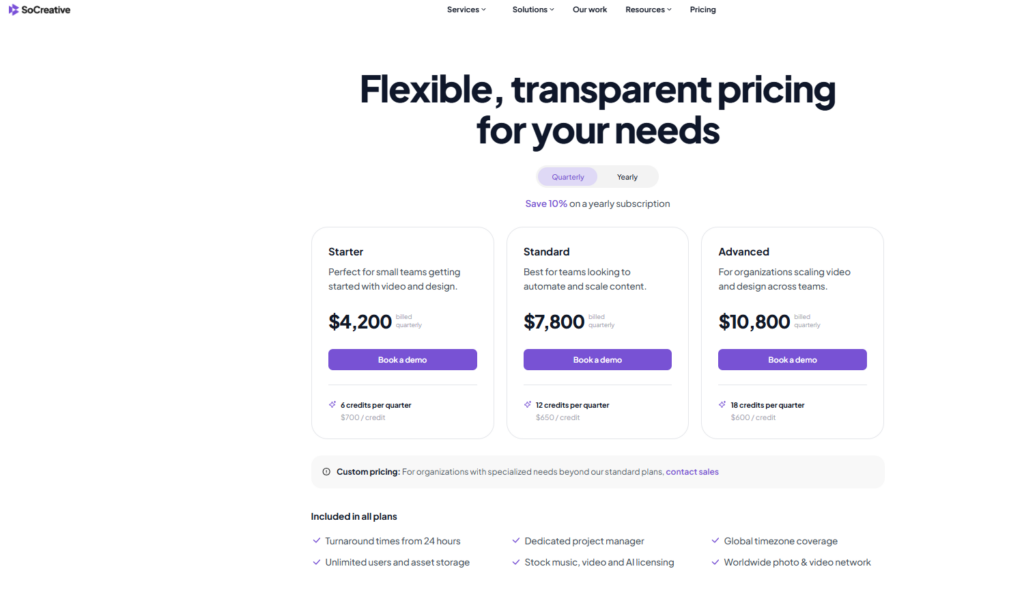
    SoCreative publishes its pricing publicly. All three plans include turnaround times from 24 hours, a dedicated project manager, global timezone coverage, unlimited users and asset storage, stock music and AI licensing, and access to the worldwide photo and video network. There’s a yearly option that saves 10% for teams that prefer annual billing, but the default is quarterly, and the commitment is quarterly too.

    Superside’s pricing isn’t published on their website. To see pricing, you have to book a demo and go through a sales process.

    What Superside does publish is that very subscription includes a monthly production budget plus a separate $1,000 monthly service fee. Again, the production budget itself isn’t disclosed publicly — you find out during the sales conversation and every plan requires a one-year minimum commitment.

    Here’s how the two pricing structures compare side by side:

    FeesSoCreativeSuperside
    Pricing visibilityYes, all plans visible on siteNo, demo required to see pricing
    Starting price$4,200/quarter ($1,400/month equivalent)Not disclosed publicly
    Separate service feeNone$1,000/month on top of production budget
    Minimum commitmentQuarterlyOne year
    Credit allocation shown upfrontYes Not disclosed 
    Per-credit cost shown upfrontYesNot disclosed
    Pause optionYesNot advertised
    Credit rolloverYesYes
    Best suited forStartups, scaling companies, global enterprisesEnterprise marketing teams and large brands

    SoCreative vs Superside: Feature comparison

    Here are the top feature differences (and similarities) between SoCreative and Superside:

    Centralized platform 

    Both services centralize briefs, feedback, revisions, and delivery in one place. SoCreative’s platform is purpose-built for production workflows which include brief, feedback, approval, delivery. Superside’s platform includes budget and project management tools with integrations for Asana and Jira.

    Scheduling shoots and delivery

    SoCreative manages shoots through the same platform as everything else. You book through the platform, get matched with a videographer from the global network, and receive edited content back through the same workflow. Most edits are delivered in 24-48 hours. Larger shoots and complex campaigns take longer but the timelines are confirmed upfront by the project manager. 

    Superside takes two weeks time for onboarding and creative workshopping alone, which is then followed by 4 weeks of production. Video editing requires separate time of course. 

    Dedicated team 

    SoCreative assigns dedicated video editors and graphic designers who work with your brand over time. Shoots are handled by matched videographers from a vetted global network. 

    Superside also assigns a dedicated global team for each project. 

    Flexibility and scale

    SoCreative is built to work for startups, scaling companies, and global enterprises. Its model is designed to change as your needs change. 

    Superside’s service is optimized for enterprise-tier clients with stable, year-long production demand.

    Find the best design partner for your brand

    Superside is built for enterprises and it comes with opaque pricing, annual commitments, and a $1,000 monthly platform fee.

    SoCreative is built for everyone, whether you have a growing startup or a global enterprise. It comes with transparent pricing on the website, zero annual lock-ins, and no separate service fee.

    If you’re evaluating design subscriptions and the friction of “book a demo to see pricing” is slowing you down, SoCreative is the alternative that removes that step entirely.

    Book a demo with SoCreative to see how it works. You’ll already know what it costs before the call starts.

  • How to Maintain Brand Consistency Across Multiple Video Editors

    How to Maintain Brand Consistency Across Multiple Video Editors

    You send the same brief to three editors. You get back three videos that feel like they were built for three different brands. The colors are slightly off and pacing is inconsistent. The lower thirds don’t match. Each video is fine on its own, but together, they don’t add up to a brand.

    This is what happens when you scale video production without a system enforcing brand consistency. More editors means more creative interpretation, and suddenly you’re spending more time correcting work than producing it. 

    In this post, we break down how to maintain brand consistency across multiple video editors, from standardizing your guidelines to centralizing feedback and production through a single platform like SoCreative.

    Key takeaways

    • Brand guidelines are often built for static content and they don’t always cover video-specific details like color grading, transitions, and audio levels, which is where most inconsistency starts.
    • Scattered assets and fragmented feedback are the two biggest causes of brand drift across multiple editors.
    • Centralizing your templates, approved assets, and revision notes in one place removes the guesswork that causes editors to interpret your brand differently.
    • A quarterly video brand audit helps you catch drift early and turn corrections into permanent system updates.
    • A subscription service like SoCreative lets you scale video production through a single platform where your brand standards are built into the workflow from the start.

    Why consistency breaks down when multiple editors are involved

    Here are some of the many reasons why brand consistency keeps breaking down even when you are working with multiple editors:

    Brand guidelines weren’t built for video: Most brand guidelines are designed for static content like logo placement, color codes, and typography rules. They don’t always translate easily to video. With no specific details about color grading, transition style, and audio level, each editor makes their own call which directly leads to large variations across the board. 

    Asset access is fragmented: When your fonts, motion graphics templates, and approved music tracks live across different folders, drives, and inboxes, editors pull from whatever they can find. That’s how outdated logos end up in published videos.

    Feedback never reaches the whole team: When revision notes are scattered across email threads and Slack messages, revisions happen in isolation as well. One editor fixes the mistake, but the next editor repeats the same mistake because they never saw the correction. There’s no shared record of what was flagged, what was changed, or why. Every editor is working from their own version of what “right” looks like, and that version drifts further from your brand with every project.

    How to build a system that keeps editors aligned and your brand consistent

    Fixing brand consistency across multiple editors requires removing the variables that cause drift in the first place.

    Step 1: Create a video-specific brand reference

    General brand guidelines don’t cut it for video. You need a reference that covers color grading profiles, typography in motion, standard transitions, audio levels, logo placement within the frame, and tone of narration. If your editors have to interpret a static PDF to make video decisions, you’ve already introduced variability.

    Step 2: Centralize approved assets along with guidelines

    A document telling editors what to do is different from giving them the actual tools to do it. Put your pre-built intro and outro sequences, motion graphics templates, color grading presets, approved music tracks, and font files in one place. 

    Step 3: Build templates

    When every editor starts from the same project file, with branded lower thirds pre-loaded, the intro already built, and the color grade applied, achieving brand consistency gets easier. You stop relying on editors to remember the rules and start relying on the system to enforce them.

    Step 4: Centralize feedback so corrections become system improvements

    By centralizing feedback, you are able to catch the same mistake appearing across multiple deliverables and fix it at the source, instead of correcting each video individually.  Over time, your feedback log becomes a reference that editors cross reference before each delivery

    Step 5: Run a quarterly video brand audit

    Every quarter, pull your 10 most recent videos and watch them back to back in one sitting. Score each video against your brand guide on five specific criteria: color grading, typography in motion graphics, pacing and cuts, audio levels, and CTA placement. Flag anything that has drifted from the standard and track which editors or project types are producing the most inconsistencies. Then take those findings and add them to your guideline/feedback document

    How SoCreative helps maintain brand consistency

    SoCreative is a subscription-based video production service that gives you a dedicated production team without the overhead of hiring one. You submit a brief, get matched with vetted editors and videographers, and receive finished videos in 24–48 hours. Everything from briefs to feedback to final delivery happens inside one platform.

    That single-platform setup is exactly what makes brand consistency possible at scale. Most consistency problems come from fragmented workflows. SoCreative replaces that fragmentation with a production system where everything your editors need is already built in.

    If your team is already producing video but consistency is slipping as output grows, the problem is usually the production system — not the editors. SoCreative gives you a way to produce video consistently without adding complexity to your workflow.

    FAQs

    Why is brand consistency still breaking down even though we have brand guidelines? 

    Most brand guidelines are built for static content like logos, colors, and typography. They don’t cover video-specific decisions like color grading, transition styles, audio levels, or motion graphics. So editors fill in the gaps with their own judgment, and that’s where drift starts. The fix isn’t more documentation. It’s building video-specific references and templates that editors can actually pull from during production.

    How do you maintain consistency when producing across multiple regions?

    You can set up centralized templates with defined localization parameters. The global brand reference can set the floor for regional teams to adapt within those boundaries. 

    Can SoCreative work with our existing brand guidelines?

    Yes. Every request is submitted with your references and brand assets built into the brief. The platform stores past projects so editors build familiarity with your style over time. Consistency improves with each project, not just from the first one.

    How quickly can we get started with SoCreative

    Once you’re onboarded, you can start submitting requests immediately. Most edits are delivered within 24-48 hours. The system is built for ongoing production and you don’t need to wait for re-scoping and custom quotes every time you create a new project. 

  • How to Scale Video Content Without Hiring an In-House Team

    How to Scale Video Content Without Hiring an In-House Team

    89% of businesses now use video marketing and 93% of organizations say video conversion rates match or beat every other content format they run. So the question isn’t whether you should produce video. It’s whether your production setup can actually keep up with how much video content you need to get ahead of your competition. 

    Over 55% of marketers produce videos in-house, yet bandwidth complaints are universal. As a result, over 31% of businesses produce videos in-house while also working with vendors to scale video production. 

    It’s clear that in-house teams alone can’t keep up with the volume of modern marketing demands.

    Hiring more people feels like the obvious fix, but it’s slow, expensive, and still leaves you capped by headcount. In this blog, we take a look at how to scale video content by building a production system that grows with demand instead of with your payroll.

    Key takeaways

    • 89% of businesses use video marketing, but most in-house teams can’t keep up with the volume modern channels demand.
    • Hiring in-house video producers is slow, expensive, and creates management overhead that compounds over time.
    • A video production subscription like SoCreative lets you skip the hiring process entirely. You just submit a brief and receive edited videos in 24-48 hours.
    • Scaling sustainably means standardizing your workflow first, then plugging execution into a system built for continuous output.

    Why scaling video content becomes a bottleneck

    Five years ago, you might have needed one promo video per quarter. Today, most brands need dozens of videos per month including short-form ads, product walkthroughs, social cutdowns, testimonial clips, and explainer videos for different audiences. 

    Here are some of the reasons why scaling video content has now become a bottleneck

    Production models weren’t built for this: The real issue is not the in-house team but the fact that traditional production workflows, whether run by creative agencies, freelancers, or your own in-house team were designed for project-based output. They weren’t built for the continuous content pipeline that modern digital marketing now demands.

    More channels mean more formats: You’re no longer producing one video and distributing the same copy everywhere. Each platform has its own specs, aspect ratios, and audience expectations. A single campaign can require five or six different edits before it even goes live. Without a system that handles that volume, your team spends more time reformatting than creating.

    In-house vs design subscription model: What actually scales?

    Here are the key differences between in-house teams and managing video production without an in-house team through a design subscription like SoCreative.

    FactorIn-house teamDesign subscription
    SpeedSlow ramp-up. Hiring and onboarding can take weeks before output starts24-48 hour turnaround on edits. Production starts the day you submit a brief
    Cost structureFixed salaries, benefits, equipment, and software licenses required, regardless of output volumeCredit-based model with predictable quarterly pricing. You pay for output, not overhead
    ScalabilityLimited by headcount. More output requires more hires.Scales with demand. You can add requests without adding people.
    Skill coverageLimited to whoever you hired. Any skill gaps require another round of recruiting.Access to a global network of vetted videographers, editors, and motion designers.
    ManagementRequires daily oversight, project management, and creative direction.Managed within one centralized platform. Briefs, feedback, and delivery in one place.
    Output volumeBottlenecked by team bandwidth and competing priorities.Continuous content pipeline. Submit requests as fast as your strategy demands.

    .

    How to scale video production with SoCreative

    Scaling video requires a repeatable system that handles volume without breaking. Here’s the process teams use to build a real video content scaling strategy with SoCreative, a subscription-based video production service.

    Step 1: Build your video content strategy

    Define your core video content types, such as ads, social, product, lifecycle and map them to the relevant funnel stages. Identify the platforms and formats each asset needs to serve and also look at brand video examples in your space to see what’s working and what just isn’t. Remember, every video should have a clear purpose before it enters production.

    Step 2: Standardize before you scale

    Lock down your brand guidelines, editing styles, file naming conventions, and approval workflows before you even start video production at scale. Standardization helps reduce back-and-forth and makes it possible to plug external execution into your system without losing consistency.

    Step 3: Move execution to a scalable system

    Instead of expanding headcount, shift production into a system designed for volume. With SoCreative, which functions as your video marketing agency, video editing company, and production team rolled into one, the workflow is super simple: 

    1. Get a quarterly design subscription at a fixed price
    2. Submit your brief 
    3. Our team starts working on it immediately with no hiring delays or onboarding cycles
    4. Get edited videos delivered in 24-48 hours
    5. Manage feedback and revisions inside one centralized platform
    6. Repeat the entire process at scale

    Step 4: Batch and repurpose to multiply output

    Film multiple videos in one shoot instead of producing them one at a time. Take that footage and turn it into short-form clips, ad variations, and platform-specific edits. So a webinar can turn into clips, ads, and social snippets and a customer interview can become testimonials and short edits. 

    Whether you need B2B video production cutdowns or consumer-facing social content, you can submit these as batch requests through SoCreative to extend the lifecycle of every asset without overloading your team.

    Step 5: Track performance and feed insights back into production

    Measure watch time, engagement rates, and conversion metrics by format and platform. Use those insights to request new variations, adjust messaging, and improve future content. 

    Because production cycles are fast, measured in hours, not weeks, you can implement updates quickly without restarting the process.

    Step 7: Build a continuous production loop

    At scale, video production becomes an ongoing system. The loop includes planning, producing, analyzing, iterating, and repeating. 

    With SoCreative handling execution, you submit new requests continuously, keep your content pipeline active, and scale output without additional hiring.

    SoCreative helps you scale video production in just a few clicks

    You don’t need a bigger team to produce more videos. All you need is a better system and a reliable provider.

    SoCreative gives you a repeatable system for continuous video production with vetted videographers, in-house video editors, and a centralized platform for briefs and feedback.

    Book a demo to see how it works, or walk through the platform with us to see how SoCreative fits into your current workflow.

    FAQs

    How is a video production subscription different from hiring a freelancer or agency? 

    Freelancers require sourcing and onboarding for every project. Agencies are great for big campaigns but slow to scale and expensive to re-scope. A subscription gives you a dedicated production system where you submit briefs, get matched with vetted videographers and editors, and receive finished videos in 24-48 hours. No vendor sourcing, no renegotiating scope every time your needs change.

    What types of videos can SoCreative produce? 

    Pretty much anything your marketing team needs on a regular basis. That includes social media ads, product walkthroughs, explainer videos, testimonial edits, event recaps, short-form cutdowns, and platform-specific variations. If it fits into a brief, it fits into the system.